Custom Mantel Wood Selection Guide: Reclaimed Beams to Live Edge Slabs
Explore mantel wood options from reclaimed timber beams to live edge slabs. See real installations showcasing grain, texture, and finish choices for fireplace…
Published · Reviewed by Lumbr editorial
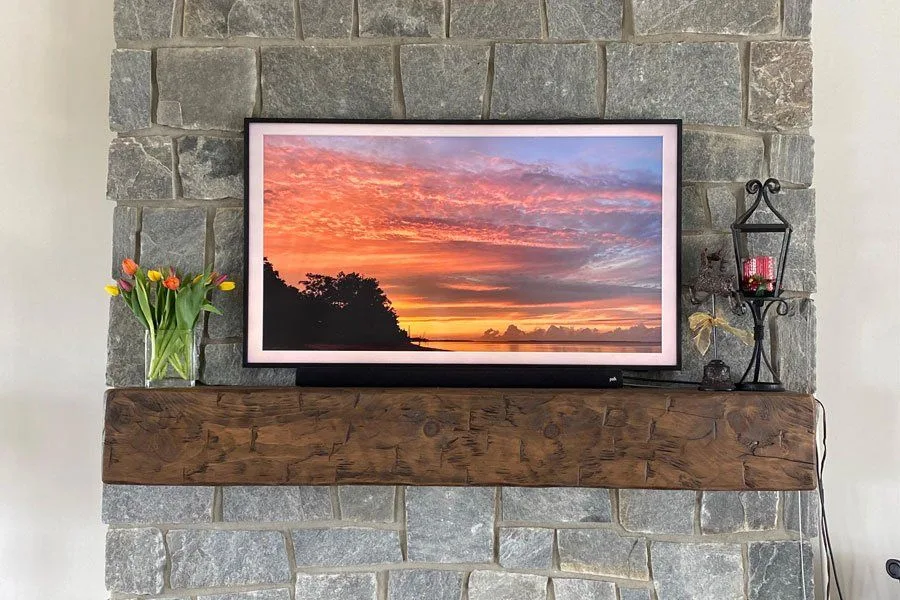
Choosing the right mantel wood transforms a fireplace from functional to unforgettable. The decision reaches beyond species alone—thickness, edge profile, surface texture, and patina all shape the character of the room. Reclaimed timbers carry the marks of their former lives: mortise joints, checking, and weathered gray tones that anchor rustic and farmhouse interiors. Live edge slabs bring organic curves and bark inclusions that soften contemporary stone surrounds. Smooth-sawn beams offer clean lines, while rough-hewn surfaces add tactile depth. Whether you’re drawn to the heft of a ten-inch beam or the sculptural quality of a natural edge, understanding how wood behaves in this high-visibility role helps you make a choice that feels both intentional and enduring.
Reclaimed Timber with Exposed Joinery
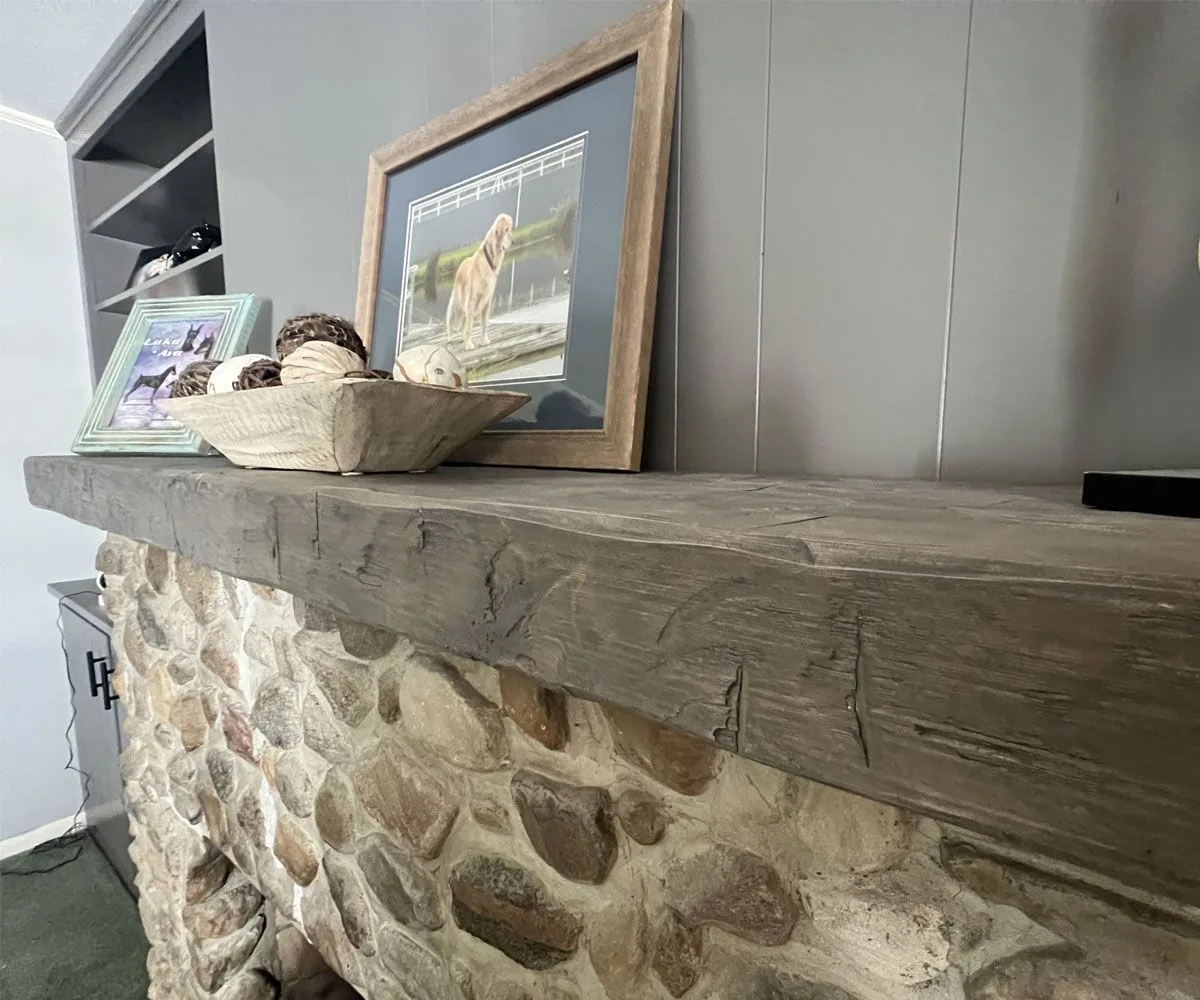
A weathered beam mantel mounted above river rock brings instant history to a living room. The piece shown here—sourced by The Barnwood Collections in Valley City, Ohio—displays prominent mortise joints and a distressed gray finish that speaks to decades of use before reclamation. The checking and surface cracks aren’t flaws; they’re proof of authenticity, the kind of detail you can’t replicate with new lumber.
This style of fireplace mantel wood works especially well when the stone surround has texture and variation. The rough patina of the timber echoes the irregularity of the rock, creating a cohesive rustic aesthetic. Floating installation keeps the focus on the beam’s mass and joinery, while the aged surface requires no additional finish—just a light cleaning to preserve the character that’s already there.
Chunky Beam Mantels in Vaulted Spaces
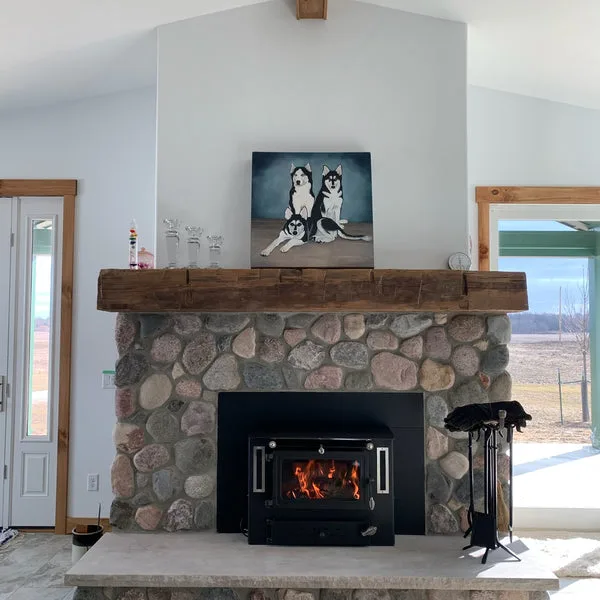
Scale matters. In a room with soaring ceilings and exposed structural beams overhead, a mantel needs visual weight to hold its own. The solid reclaimed timber featured here—installed by Homestead Timbers of Marne, Michigan—measures roughly eight to ten inches thick, a dimension that anchors the stone fireplace without competing with the architecture above.
The natural finish showcases an aged patina, with visible weathering and character marks that tell a story. This kind of wood for a mantel pairs beautifully with modern farmhouse interiors, where clean lines meet salvaged materials. The beam’s heft also provides practical depth for styling—candles, frames, and seasonal greenery sit comfortably without crowding. When choosing reclaimed lumber at this scale, look for pieces with consistent thickness and minimal twist, ensuring a clean mount against both stone and wall.
Live Edge Mantel Slabs for Organic Contrast
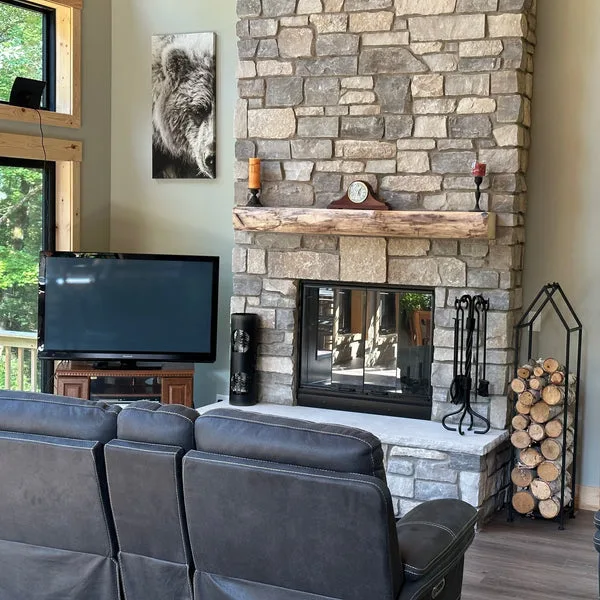
A live edge fireplace mantel introduces an element of sculpture. The slab shown here retains its natural bark and organic edge profile, a light-colored piece that contrasts sharply with the gray stacked stone below and the black fireplace insert within. The pronounced live edge on the front creates a visual softness that tempers the geometry of the surround, making it a smart choice for spaces that blend rustic warmth with contemporary restraint.
This mantelpiece wood—six to eight inches thick—was installed by Homestead Timbers and left with a clear or natural oil finish to highlight the grain without adding color. Live edge mantels work best when the slab is stable and kiln-dried; green wood will continue to move and crack as it acclimates. The irregular edge also demands careful placement—centering the most dramatic curve over the firebox draws the eye exactly where you want it.
Rough-Sawn Reclaimed Beams with Decorative Accents
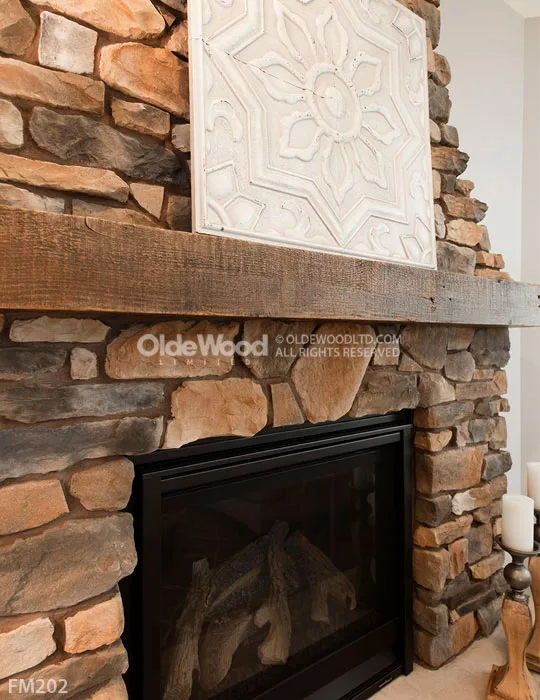
Texture defines this installation. The heavy-duty reclaimed beam—sourced by Olde Wood Limited in Magnolia, Ohio—shows a rough-sawn surface with visible saw marks and a natural brown patina that reads as both rugged and refined. At six to eight inches thick, the mantel provides enough depth to cast a subtle shadow line, adding dimension to the stacked stone fireplace surround.
What sets this piece apart is the interplay with the white decorative tin tile above. The contrast between the dark, weathered wood and the bright, embossed metal creates a layered focal point that feels collected rather than matchy. This approach works especially well in farmhouse interiors where mixing materials—reclaimed timber, stone, metal—adds visual interest without clutter. The rough texture also means the beam can handle a bit of soot or wear; imperfections only deepen its character over time.
Selecting mantel wood is as much about understanding your room’s architecture as it is about personal taste. Reclaimed beams offer texture and history, while live edge slabs bring organic form. Consider thickness, finish, and how the wood will interact with your fireplace surround—each choice shapes the mood and longevity of the installation. Trust your eye, and let the material speak for itself.
Image credits
Photographs are from the project galleries of the lumber businesses below. Each business name links to its profile on Lumbr; each "source page" link redirects out to the business's own site (we log referrals so we can share traffic data with featured vendors). If your business is featured and you'd like an image removed, email hello@lumbr.me .
- Homestead Timbers — Marne, MI
- Olde Wood Limited — Magnolia, OH
- The Barnwood Collections — Valley City, OH