Reclaimed Wood Flooring: Character in Contemporary Interiors
Reclaimed wood flooring brings authentic patina and texture to modern spaces. Explore three installations that pair salvaged lumber with vaulted ceilings and…
Published · Reviewed by Lumbr editorial
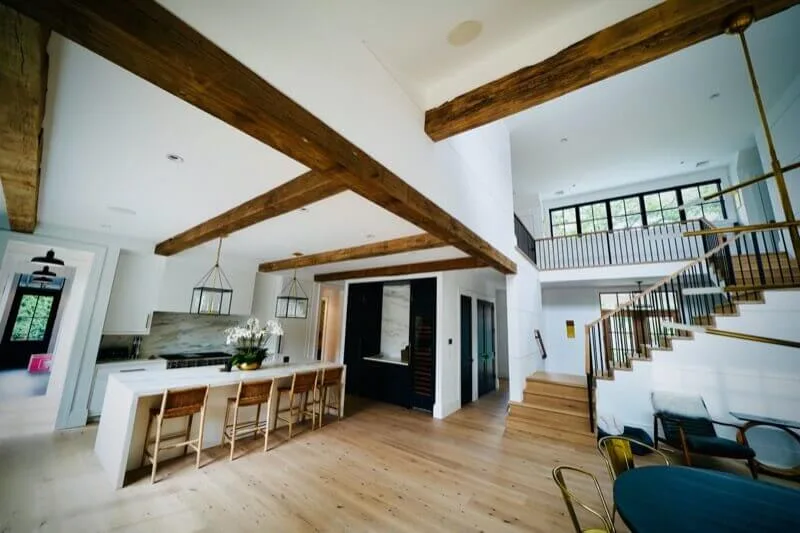
There’s a reason reclaimed wood flooring has moved beyond trend and into permanence: nothing manufactured can replicate the depth of a surface that has already lived decades. The nail holes, the color shifts from honey to charcoal, the occasional checking—these aren’t flaws but proof of provenance. In contemporary interiors, especially those that lean into volume and natural light, reclaimed lumber flooring grounds the space without weighing it down. It plays beautifully against white walls and steel, and it holds its own under the drama of exposed timber. The installations that follow show how salvaged material on the floor can anchor a room while letting the architecture breathe.
Vaulted Volume and Structural Timber
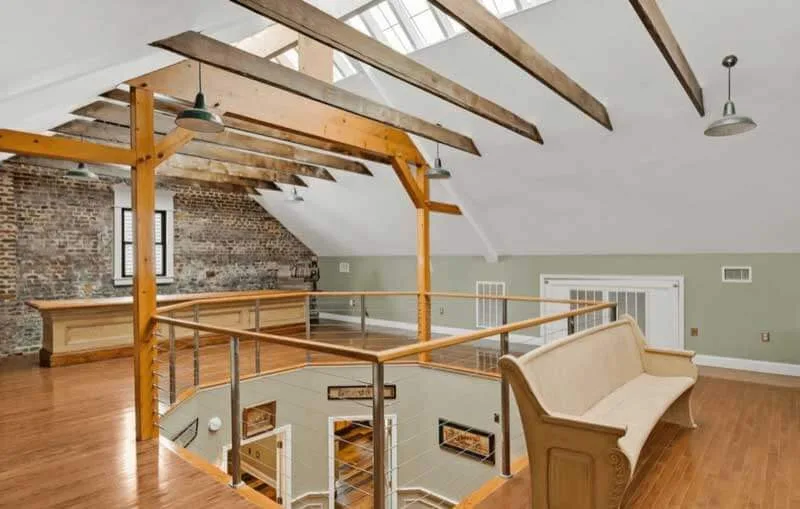
The loft opens vertically, its ceiling a grid of parallel beams that read almost like ribs—structural, rhythmic, unapologetic. Natural light pours through skylights slotted between the timbers, casting shadows that shift through the day. The beams themselves carry a natural finish, their surfaces left close to as-found, and they’re supported by heavy posts that make no attempt to disappear. Below, the reclaimed lumber flooring runs in long planks, its tone several shades warmer than the beams overhead but still restrained.
The interplay between vertical drama and horizontal calm is what makes the space work. A mezzanine level, edged with metal cable railing, reinforces the industrial undertone without tipping into warehouse pastiche. An exposed brick accent wall adds texture in a different register—masonry against timber, both materials that improve with age. The flooring here doesn’t compete; it simply extends the language of salvaged material across the entire envelope, tying beam to post to floor in a single, coherent gesture.
Layered Texture in a Farmhouse Living Room
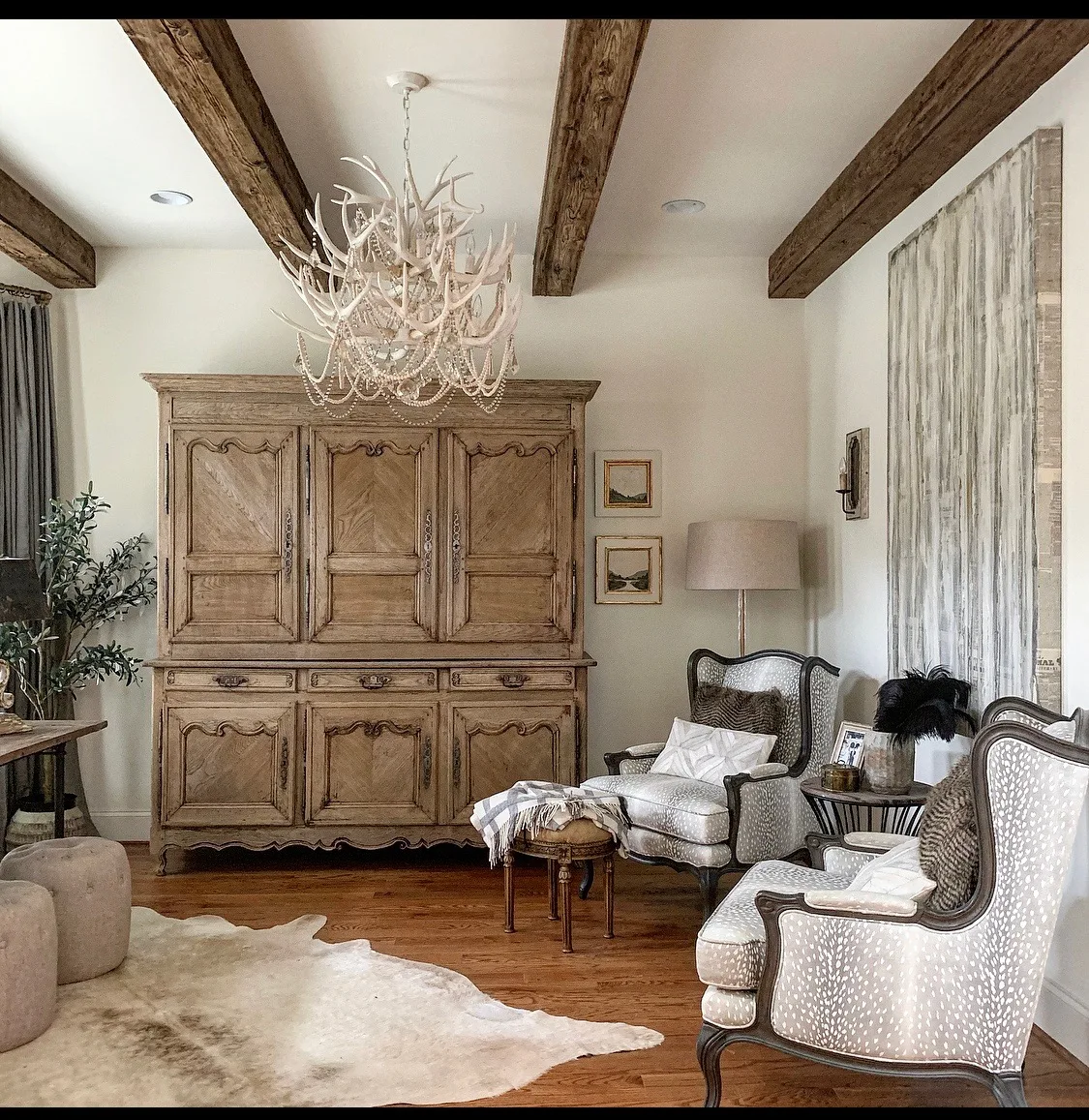
Ceiling beams command attention the moment you step in—hand-hewn or reclaimed, their surfaces show the marks of age and tool, a distressed finish that feels earned rather than applied. They span the width of the room in bold, dark strokes, and below them, a large-scale reclaimed wood wall panel serves as the primary focal point. The paneling is composed of wide boards, each with its own patina, arranged to create a textured plane that anchors the seating area.
The reclaimed barnwood flooring continues the material story but in a quieter voice. Medium-toned planks stretch across the room, their finish warm and slightly matte, allowing the overhead beams and vertical paneling to take the lead. The combination—ceiling, wall, floor—could risk monotony, but the variation in tone and texture keeps each surface distinct. This is farmhouse design that understands restraint: rustic without being cluttered, traditional without feeling static. The floor’s role here is foundational, literally and visually, supporting layers of reclaimed character without shouting for attention.
Wide-Plank Patina in a Sloped-Ceiling Bedroom
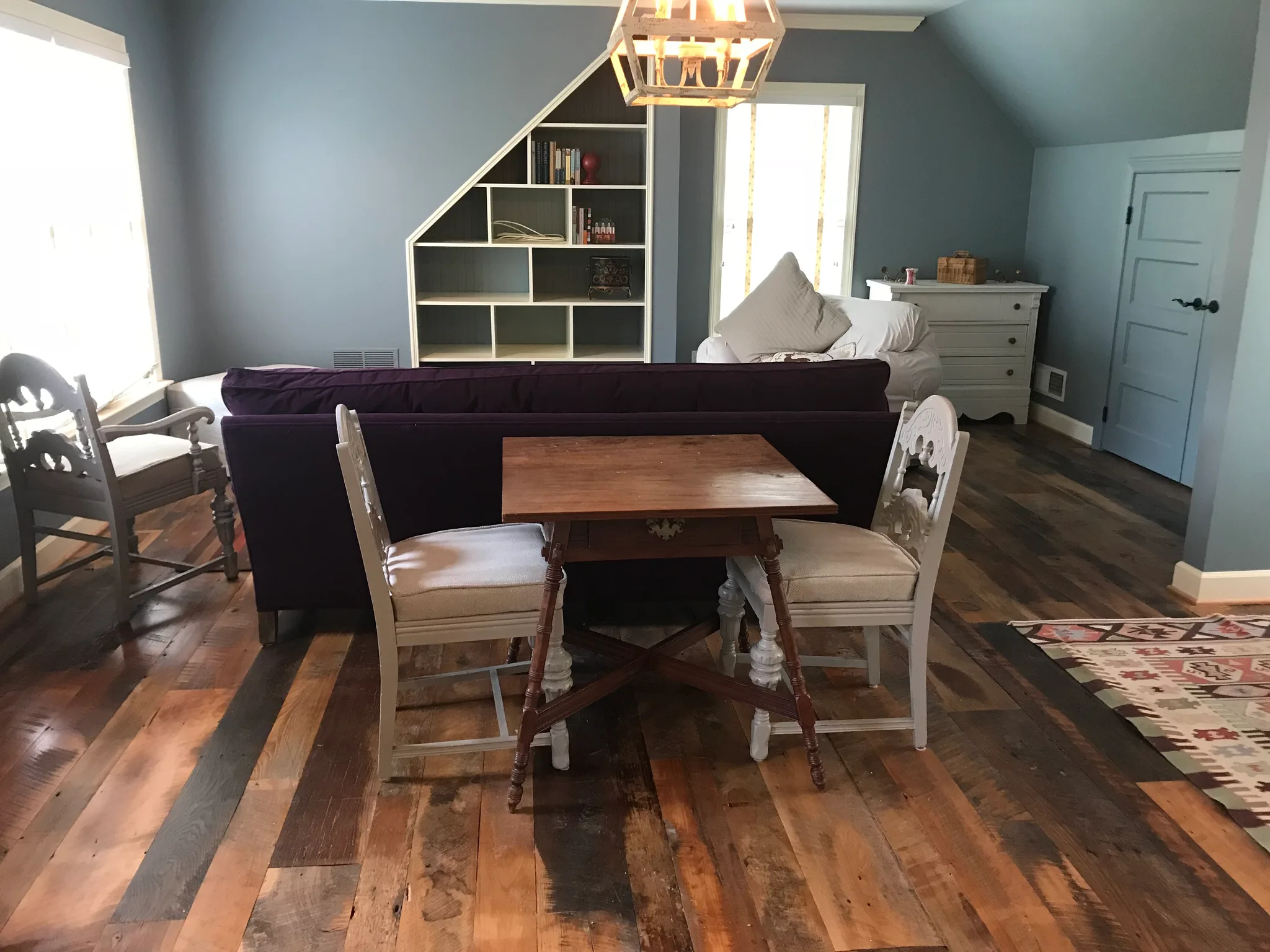
The floor tells the story before the furniture does. Wide planks of reclaimed barnwood, each one a different width, stretch across the bedroom in a patchwork of color—light honey here, dark walnut there, streaks of gray where weather left its mark. Nail holes punctuate the surface at irregular intervals, and the edges show the kind of wear that only comes from decades of use. This isn’t flooring that pretends to be new; it’s flooring that wears its history openly.
Under a sloped ceiling, the varied tones and textures of the salvaged material add warmth without pattern, interest without busyness. Mixed hardwoods contribute to the range of color, and the random widths reinforce the sense that these boards were pulled from different sources, different barns, different lives. In a multi-functional bedroom where the architecture is simple and the palette eclectic, the reclaimed lumber flooring does the heavy lifting—anchoring the space, adding soul, and proving that character doesn’t need to be designed in. It just needs to be chosen well.
Reclaimed wood flooring works because it refuses to be background. It brings texture, history, and a kind of visual honesty that new material can’t fake. Whether it’s grounding a soaring loft or warming a sloped-ceiling bedroom, salvaged lumber on the floor changes the way a room feels—less decorated, more inhabited. That’s the point.
Image credits
Photographs are from the project galleries of the lumber businesses below. Each business name links to its profile on Lumbr; each "source page" link redirects out to the business's own site (we log referrals so we can share traffic data with featured vendors). If your business is featured and you'd like an image removed, email hello@lumbr.me .
- Atlanta Barnwood — Marietta, GA
- Real Antique Wood — Irvington, NJ