Wood Slab Dining Tables: Walnut, Maple & Oak Inspiration
Explore stunning wood slab dining tables in walnut, maple, and oak. From live-edge designs to figured grain patterns, discover how custom wood slabs transform…
Published · Reviewed by Lumbr editorial
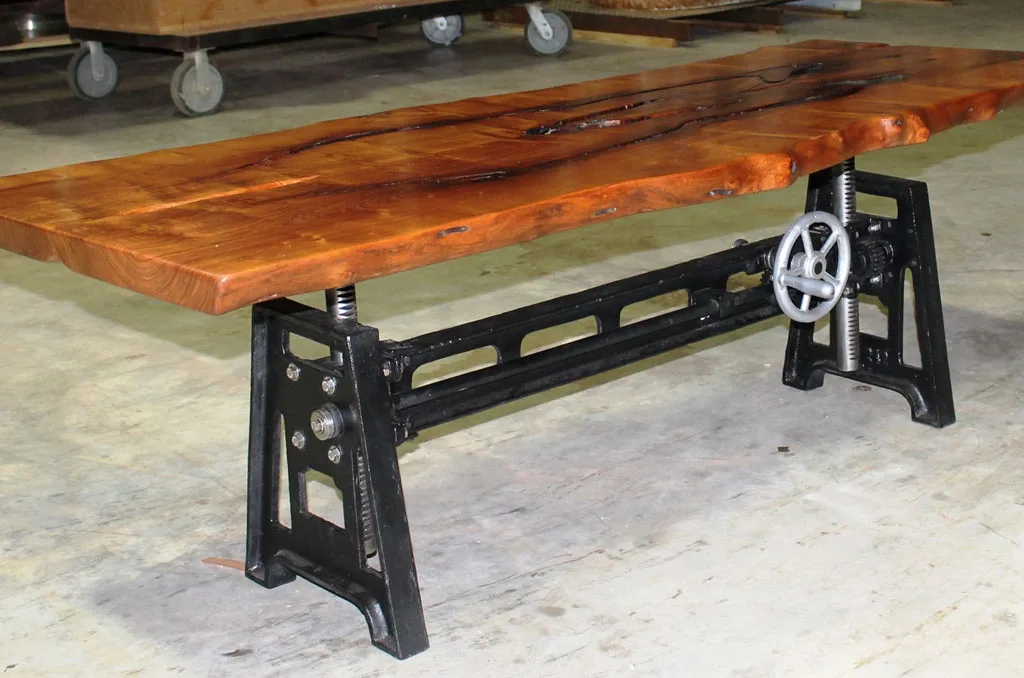
A single wood slab can anchor an entire room. Whether you’re drawn to the deep chocolate tones of black walnut slabs or the pale, mineral-streaked beauty of figured maple, live-edge table top wood brings an unmistakable presence to dining spaces, home offices, and entryways. The appeal lies not just in scale but in singularity—each slab carries the tree’s growth rings, knots, and natural contours, preserved and finished to reveal decades of character. As more homeowners and designers search for wood slabs near me, custom mills across the country are responding with inventories that span species, widths, and finishes, ready to become wood slab tables that feel both heirloom and entirely contemporary.
Contrasting Bases, Shared Grain Drama
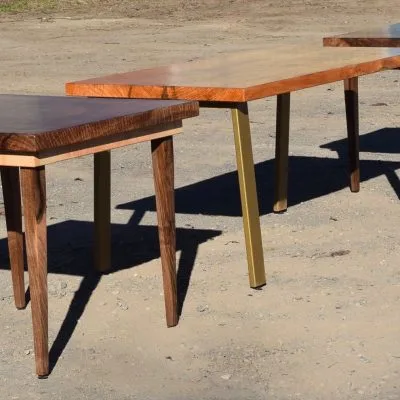
Two live-edge dining tables rest side by side on a concrete yard, each slab showcasing the kind of figured grain that makes walnut slabs so coveted. The left piece pairs its organic edge with angled wooden legs in a warm honey tone, echoing mid-century simplicity. The right slab takes a bolder turn: mixed-metal legs in brass and blackened steel create an industrial-luxe contrast against the rich, swirling figure that runs the length of the wood tabletop. Both slabs retain their natural bark edges, and both reveal the deep chatoyance that comes from careful milling and finishing.
This kind of side-by-side display underscores a key design truth: the same species can wear entirely different personalities depending on base choice. Angled wood feels grounded and craft-forward; mixed metal reads glamorous and unexpected. What remains constant is the slab itself—its width, its live edge, its refusal to be anything but the focal point. For designers working with clients who want statement dining pieces, starting with premium wood slabs and then tailoring the undercarriage to the room’s style is a proven formula.
Showroom staging like this also highlights the importance of grain selection. Figured wood—whether burl, quilted, or flame—commands attention and justifies the investment. When you’re sourcing wood slabs near me, ask to see slabs with movement, not just width. The drama is in the detail.
Blonde Wood, Dark Veins, Modern Edge
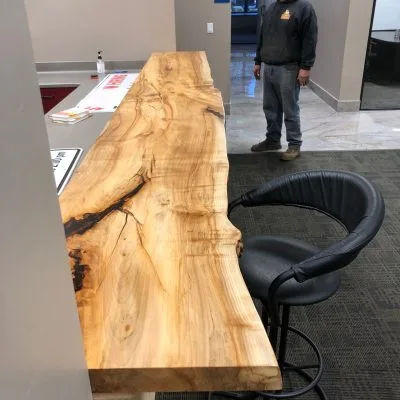
A long, sinuous slab stretches across a showroom floor, its pale blonde surface interrupted by dramatic dark mineral streaks that snake through the grain like rivers on a topographic map. This is likely maple or ash, species known for their light base color and susceptibility to spalting—the natural staining that occurs when fungi interact with the wood before milling. The result is a wood slab that feels almost painted, with inky lines and clouds that no artisan could replicate.
The live edge on one side preserves the tree’s original contour, a gentle wave that softens the slab’s overall geometry. Paired with a sculptural black chair, the piece reads as a desk or console table, slim enough for a hallway yet substantial enough to serve as a workspace. The clear finish lets every detail shine: the figure, the sapwood-to-heartwood transition, the subtle undulations in the surface that speak to the tree’s growth.
This kind of table top wood works beautifully in minimalist interiors where the slab itself provides all the visual interest. No need for pattern, color, or ornament—the wood does the work. For clients drawn to Scandinavian or Japanese-inspired design, a spalted maple slab offers organic complexity without visual noise.
Three Slabs, One Outdoor Dining Vision
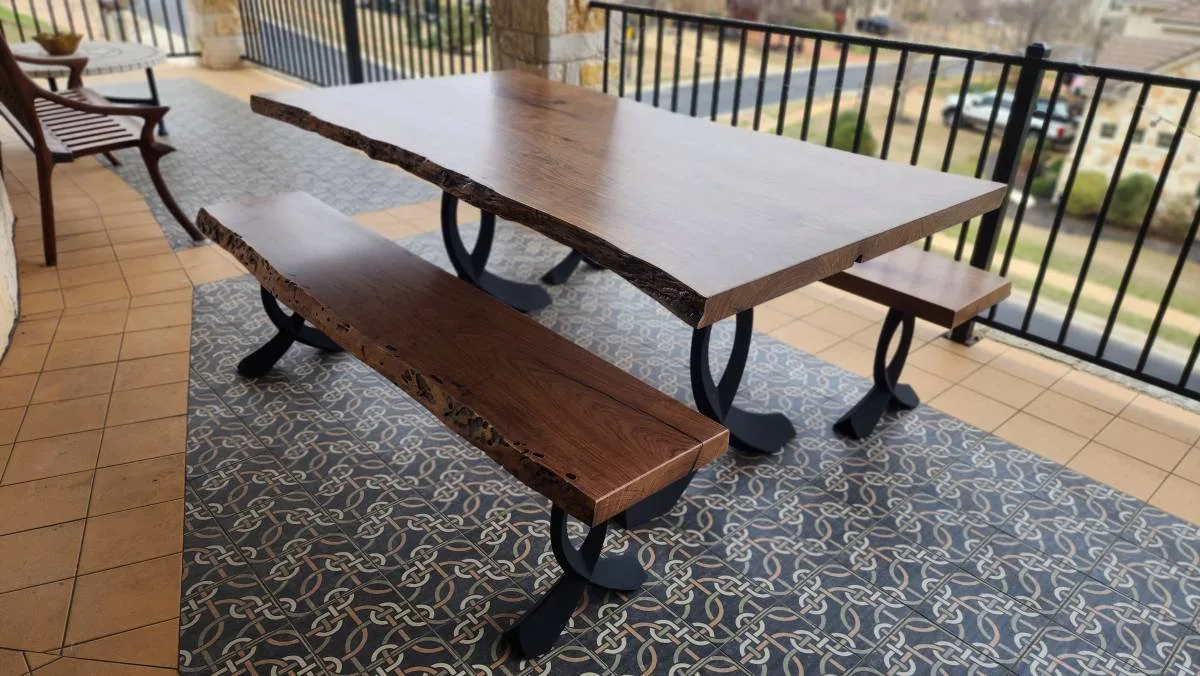
Under a covered patio, a trio of live-edge pieces forms a complete outdoor dining suite: a long table, a matching bench, and a compact side table, all cut from similar walnut slabs and mounted on black curved metal legs. The powder-coated bases provide industrial contrast and weather resistance, while the slabs themselves—finished to a rich brown—retain their natural bark edges and organic silhouettes. This is wood slab table design at its most cohesive, where repetition of form and material creates rhythm without monotony.
The main table spans eight to ten feet, generous enough for family gatherings and built to withstand the elements under shelter. The bench mirrors the table’s live edge, and the small side table echoes the same vocabulary at a different scale. Together, they demonstrate how black walnut slabs can move outdoors when properly sealed and protected, bringing warmth and texture to spaces that often default to teak or metal.
This kind of set also speaks to the growing interest in custom mill relationships. Sourcing three complementary slabs from the same log or species ensures tonal consistency and a unified aesthetic. For designers specifying outdoor furniture, working directly with a sawmill allows for matching grain, thickness, and finish—details that elevate a patio from functional to intentional.
Wood slabs offer a rare combination of scale, character, and versatility. Whether you’re drawn to the dark elegance of walnut, the mineral drama of spalted maple, or the warm neutrality of oak, a live-edge slab brings the forest into the room—literally. As custom mills continue to refine their inventories and finishing techniques, the possibilities for wood slab tables expand, meeting both traditional and contemporary tastes with equal confidence.
Image credits
Photographs are from the project galleries of the lumber businesses below. Each business name links to its profile on Lumbr; each "source page" link redirects out to the business's own site (we log referrals so we can share traffic data with featured vendors). If your business is featured and you'd like an image removed, email hello@lumbr.me .
- Berdoll Sawmill — Cedar Creek, TX
- Hunski Hardwoods — Sacramento, CA
- Texas Urban Sawmill — Dripping Springs, TX