Black Walnut Live-Edge Slabs: Furniture Showcase
Explore stunning black walnut live edge slabs from specialty lumber yards. See raw walnut live edge dining table stock, dramatic grain patterns, and natural…
Published · Reviewed by Lumbr editorial
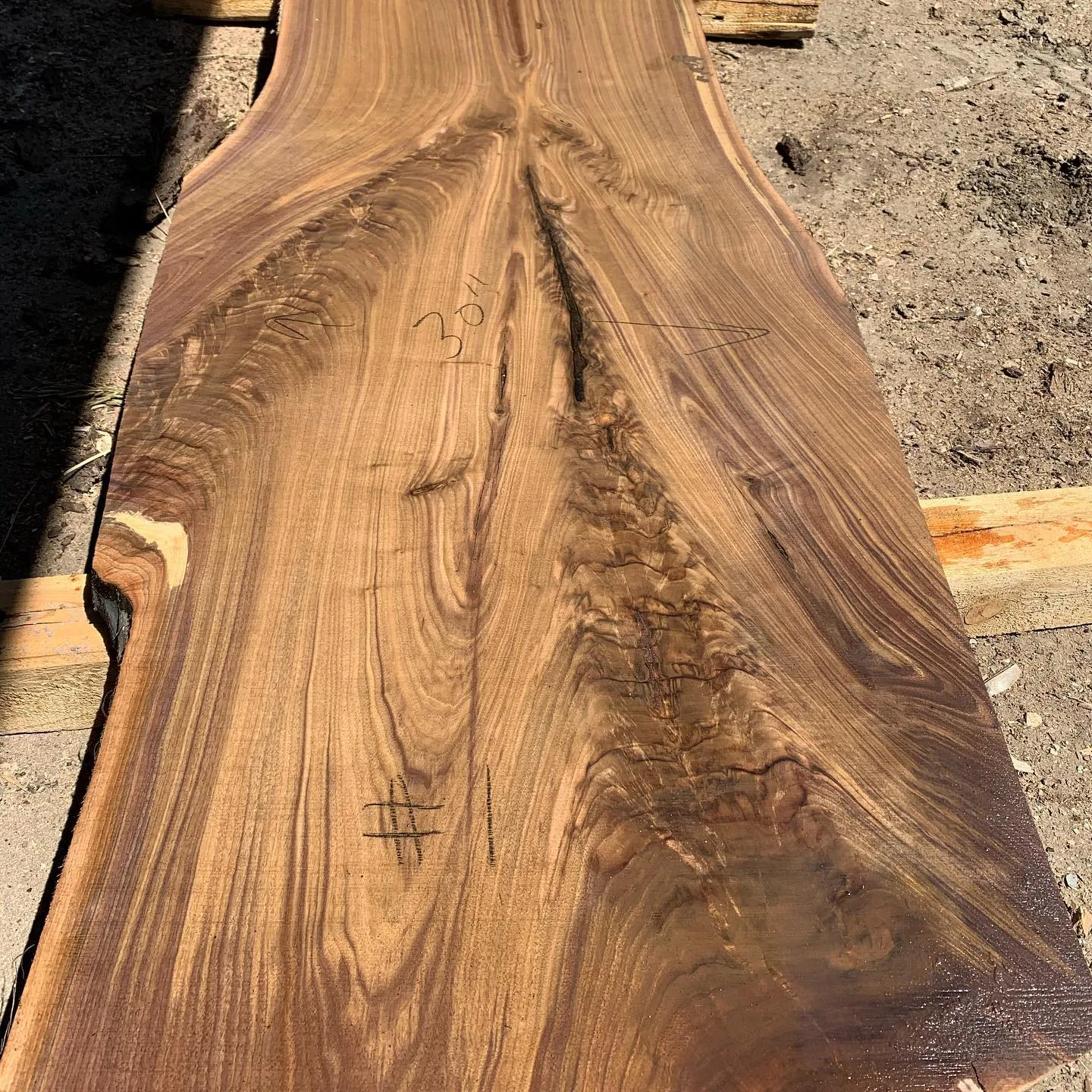
The walnut live edge dining table begins not in a workshop but in the careful selection of raw stock—slabs that carry decades of growth, weather, and character in every inch of their surface. At specialty lumber yards across the country, black walnut live edge slabs stand vertically in showrooms or rest horizontally in open-air yards, each piece a study in contrast: the smooth, planed face revealing cathedral grain and swirling figure, the untrimmed edges preserving the tree’s original contour. These installations are more than inventory; they’re galleries of possibility, where designers and makers walk among towering planks, reading the language of knots, sapwood, and natural fissures to find the single slab that will anchor a dining room or define a conference table.
Character-Grade Stock with Dramatic Figure
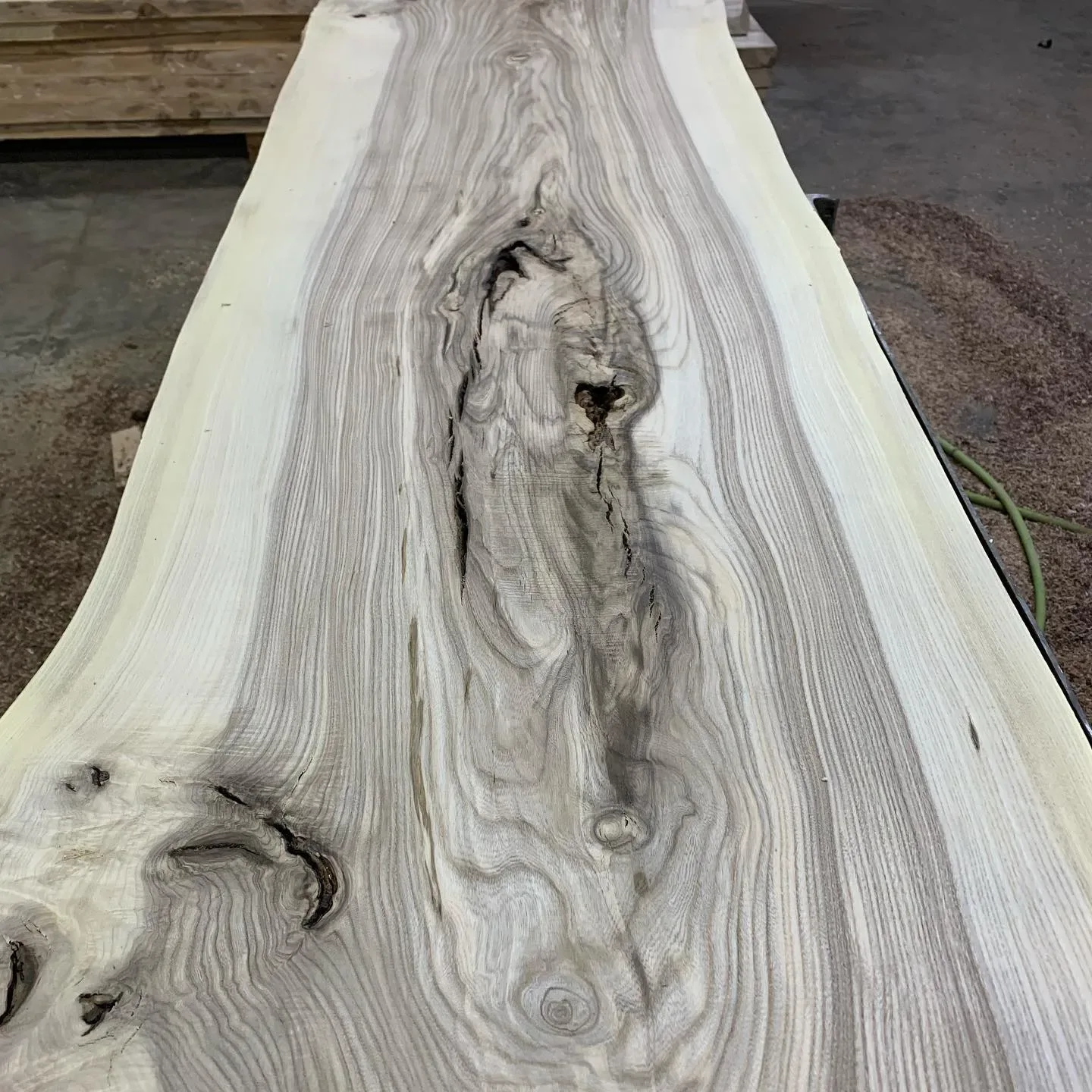
In the showroom at 701 Sawmill in Mandan, North Dakota, a light-colored slab commands attention with its swirling grain and unapologetic imperfections. The surface is lightly surfaced, enough to reveal the wood’s internal drama—prominent knots, natural fissures that trace fault lines through the heartwood, and a knothole that punctuates the center like an organic medallion. Both edges retain their natural contour, undulating in gentle waves that follow the tree’s original growth.
This is character-grade live edge walnut at its most expressive. The grain doesn’t run straight; it spirals and eddies, creating movement across the face. Cracks and checks, far from flaws, become design anchors—many makers will stabilize them with epoxy or butterfly keys, turning vulnerability into visual interest. For a walnut live edge dining table, a slab like this offers a centerpiece that refuses to fade into the background, pairing equally well with modern steel bases or rustic trestle frames.
Straight-Grain Elegance in Raw Form
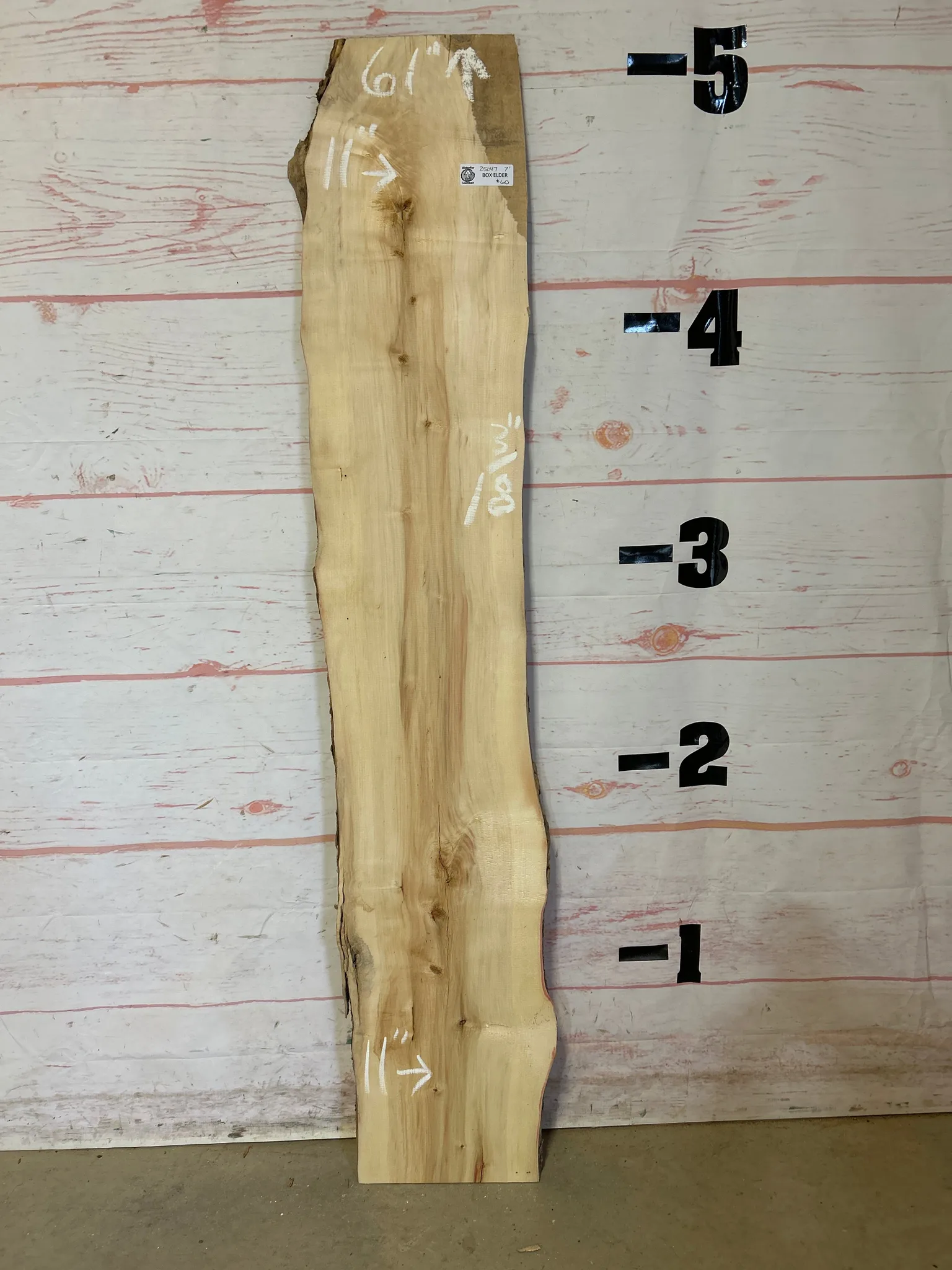
At Alderfer Lumber in Mount Pleasant Mills, Pennsylvania, a five-foot slab leans against the measurement wall, its surface unfinished and marked with inventory notations in chalk. The grain runs straight and true, a testament to the tree’s even growth—no wild figure here, just clean, parallel lines that catch light uniformly across the face. Both edges are live, preserving the organic taper and subtle bark inclusions that frame the planed interior.
This kind of restrained beauty appeals to designers seeking a walnut live edge slab that won’t compete with surrounding elements. The straight grain reads as calm and deliberate, ideal for Scandinavian-leaning interiors or spaces where the table serves as a grounding element rather than a showpiece. The raw, unfinished surface invites customization—oil for a matte, natural look, or a hard varnish to deepen the honey tones and protect against daily use.
Scale and Proportion in Vertical Display
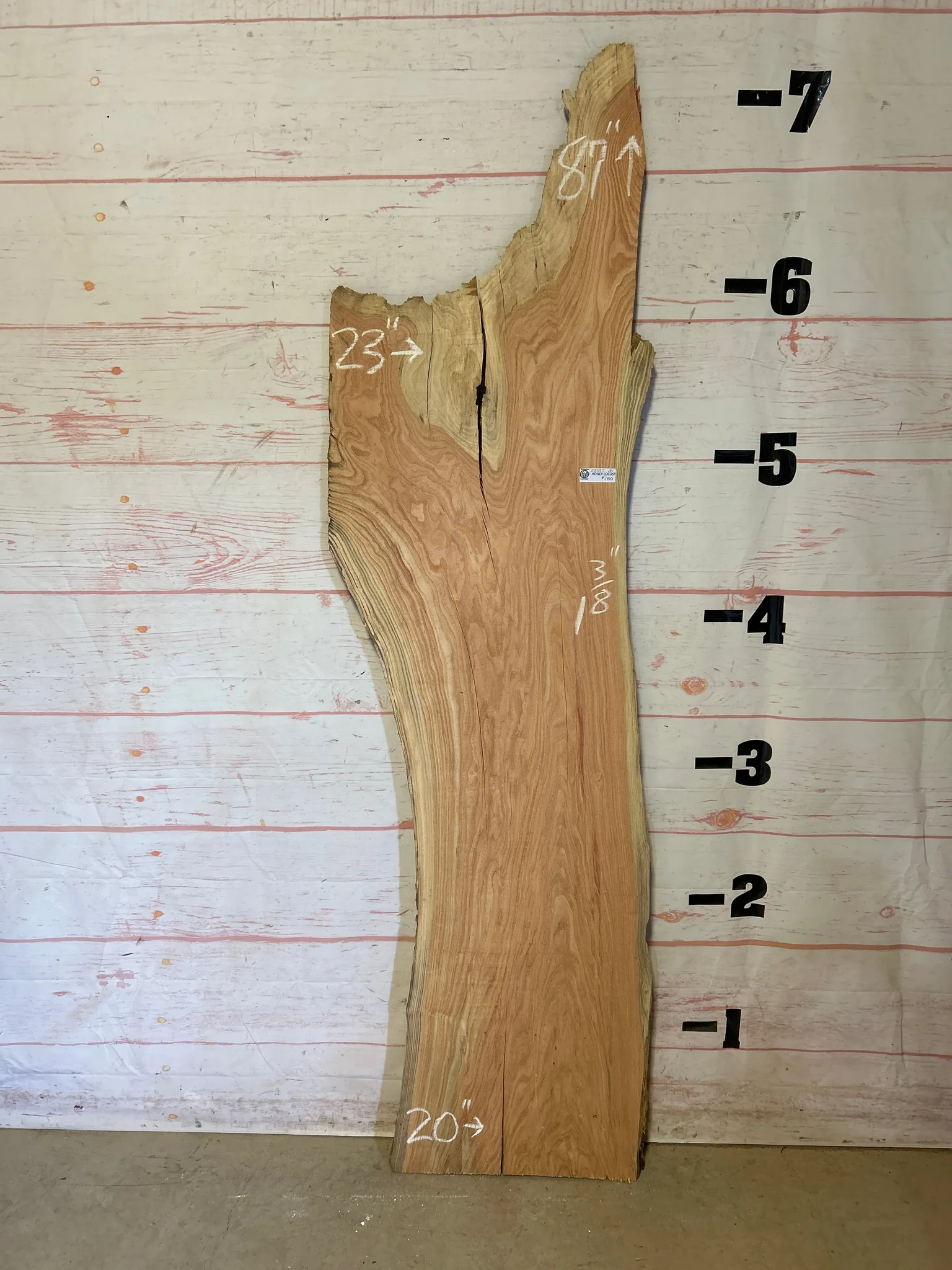
Another slab at Alderfer Lumber stands nearly seven feet tall against the same measurement wall, its live edge tracing one side in a long, sinuous curve. The chalk markings—white numerals and arrows—map dimensions and grain direction, a shorthand for the fabricators who will eventually mill it down. The color is light tan with a honey cast, the grain visible but subdued in its raw state, waiting for finish to bring depth and contrast.
Displaying black walnut live edge slabs vertically is both practical and theatrical. It saves floor space, yes, but it also lets you read the full length of the board in a single glance, assessing taper, checking for warp, and imagining how the edge will flow along the length of a black walnut live edge table. At this scale, the slab could yield a dining table for ten or be book-matched with a twin to create a conference surface with perfect symmetry. The unfinished stock is a blank canvas, its final identity shaped by the hands that select it.
Walking through these lumber showrooms is an exercise in patience and vision. Each black walnut live edge slab tells a different story—some loud with knots and figure, others quiet with straight grain and even color. The best pieces aren’t always the most perfect; they’re the ones that match the intention of the space they’ll inhabit, where wood and design speak the same language.
Image credits
Photographs are from the project galleries of the lumber businesses below. Each business name links to its profile on Lumbr; each "source page" link redirects out to the business's own site (we log referrals so we can share traffic data with featured vendors). If your business is featured and you'd like an image removed, email hello@lumbr.me .
- 701 Sawmill — Mandan, ND
- Alderfer Lumber — Mt Pleasant Mills, PA