Live Edge Countertops: Kitchen & Bar Applications That Bring Natural Character Home
Explore live edge countertop installations in kitchens and bars. From walnut islands to resin-inlaid slabs, see how natural wood edges transform modern spaces.
Published · Reviewed by Lumbr editorial
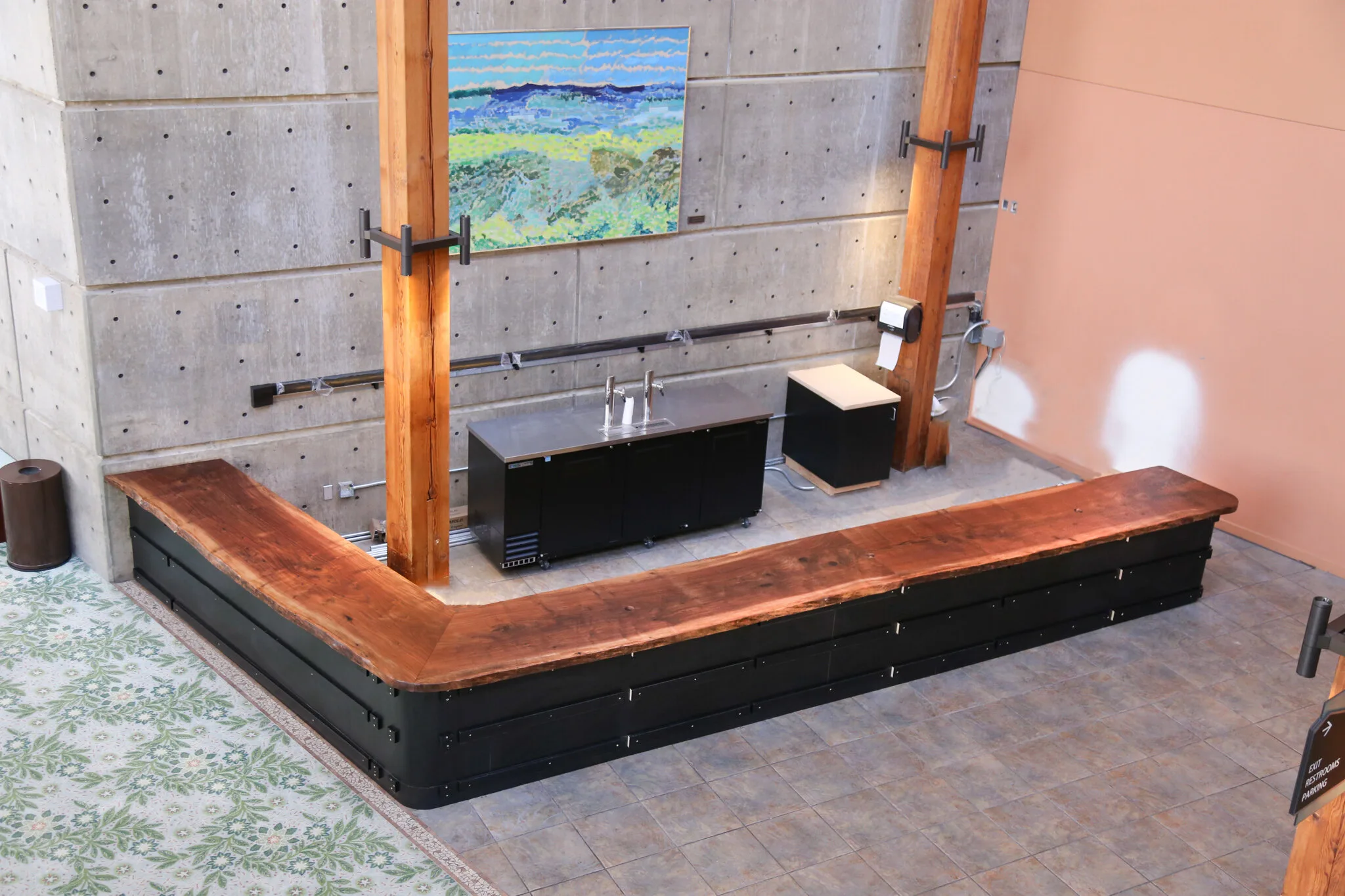
A live edge countertop does more than define a work surface—it anchors a room with the kind of organic presence that engineered materials can never replicate. Whether wrapping a kitchen island or cantilevering over a bar, these slabs preserve the tree’s natural contour, complete with knots, sapwood transitions, and the irregular line where bark once met air. The result is a surface that reads as both functional and sculptural, grounding contemporary cabinetry and open-plan layouts with warmth and texture. Across residential kitchens and hospitality bars, designers are pairing live-edge wood slabs with minimalist bases and integrated fixtures, letting the grain and edge speak louder than any backsplash tile.
Walnut Islands with Curves That Command the Room
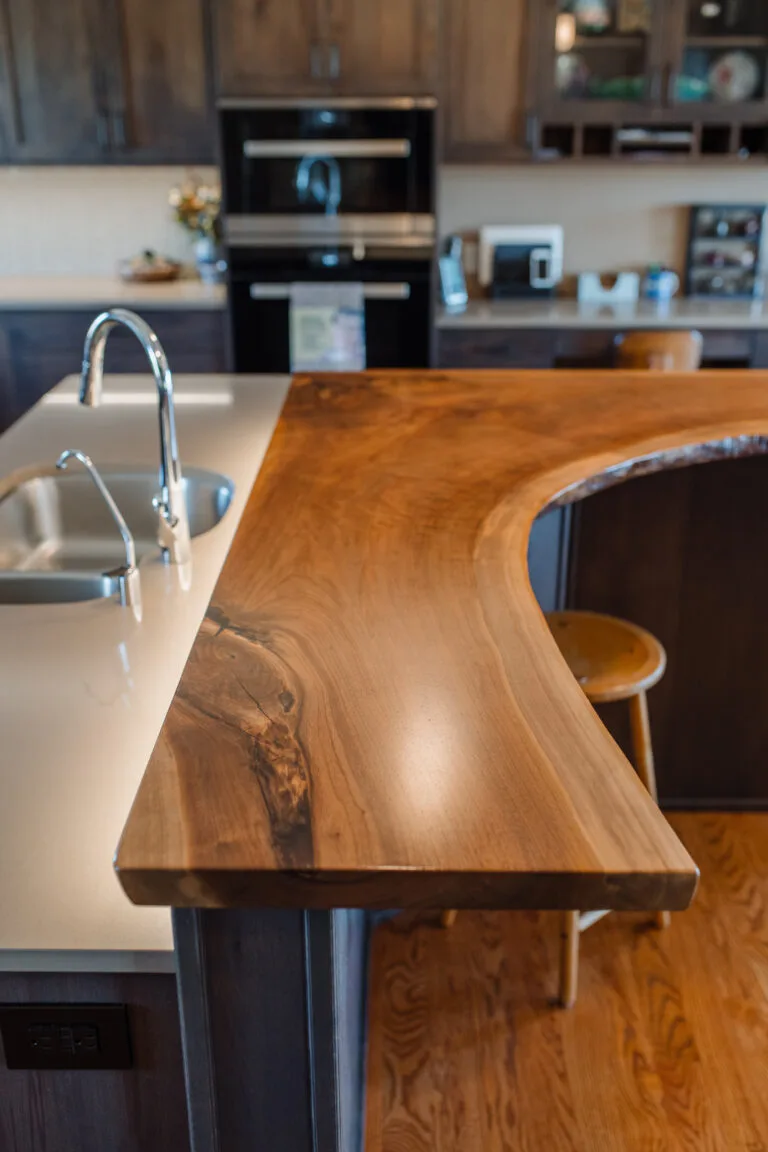
Baldwin Hardwoods in Fort Collins, Colorado, installed this honey-toned walnut slab as the centerpiece of a modern kitchen island, and the natural edge does all the talking. The curve sweeps along one side, following the tree’s original growth line, while knots and grain variations ripple across the surface in shades of caramel and amber. A smooth matte finish protects the wood without adding gloss, so the texture remains tactile and understated.
The slab extends to accommodate bar-height seating at the curved section, turning the island into a casual gathering spot as much as a prep zone. An integrated sink punctuates the work surface, but the eye keeps returning to that live edge—organic, asymmetrical, and impossible to replicate. Dark cabinetry below provides visual weight, letting the lighter wood float above and define the room’s focal point.
This kind of live edge wood countertop works because it refuses to be neutral. It introduces movement and character into a space that might otherwise feel too controlled, and it does so without requiring pattern or color beyond what the tree itself offers.
Peninsula Slabs That Wrap and Anchor
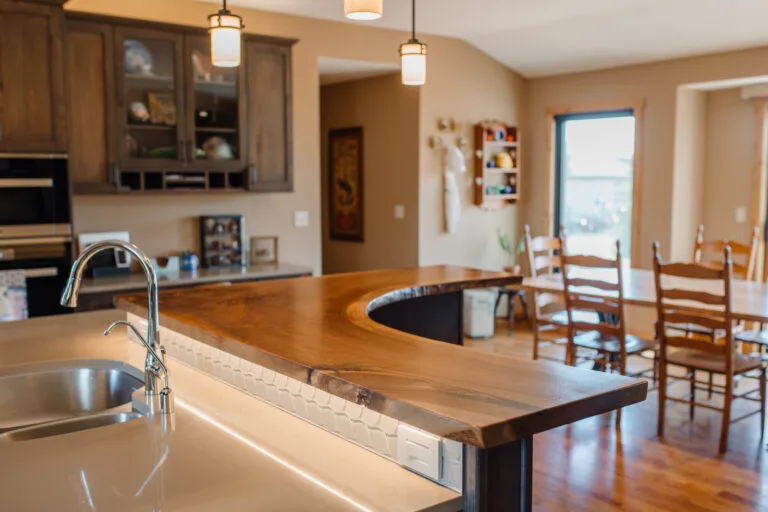
Another Baldwin Hardwoods installation demonstrates how a live edge counter top can define circulation and function simultaneously. Here, a substantial walnut or cherry slab wraps around a kitchen island, its natural edge tracing the curved peninsula where the cooking zone meets the social space. The wood measures two to three inches thick, substantial enough to cantilever without visual strain, and the grain runs in long, uninterrupted sweeps that emphasize the slab’s length.
An integrated cooktop sits flush within the surface, proof that live-edge installations can accommodate the same technical demands as any engineered stone. The finish—likely a hard oil or polyurethane—brings out the wood’s warm, reddish-brown tones while sealing it against moisture and heat. The live edge itself remains crisp and clean, free of bark but preserving the undulating line that marks where sapwood met cambium.
The contrast between the rustic edge and the modern base cabinetry is deliberate and effective. Clean lines below, organic curves above—the pairing lets each element do its job without competing for attention.
Resin-Inlaid Slabs as Statement Pieces
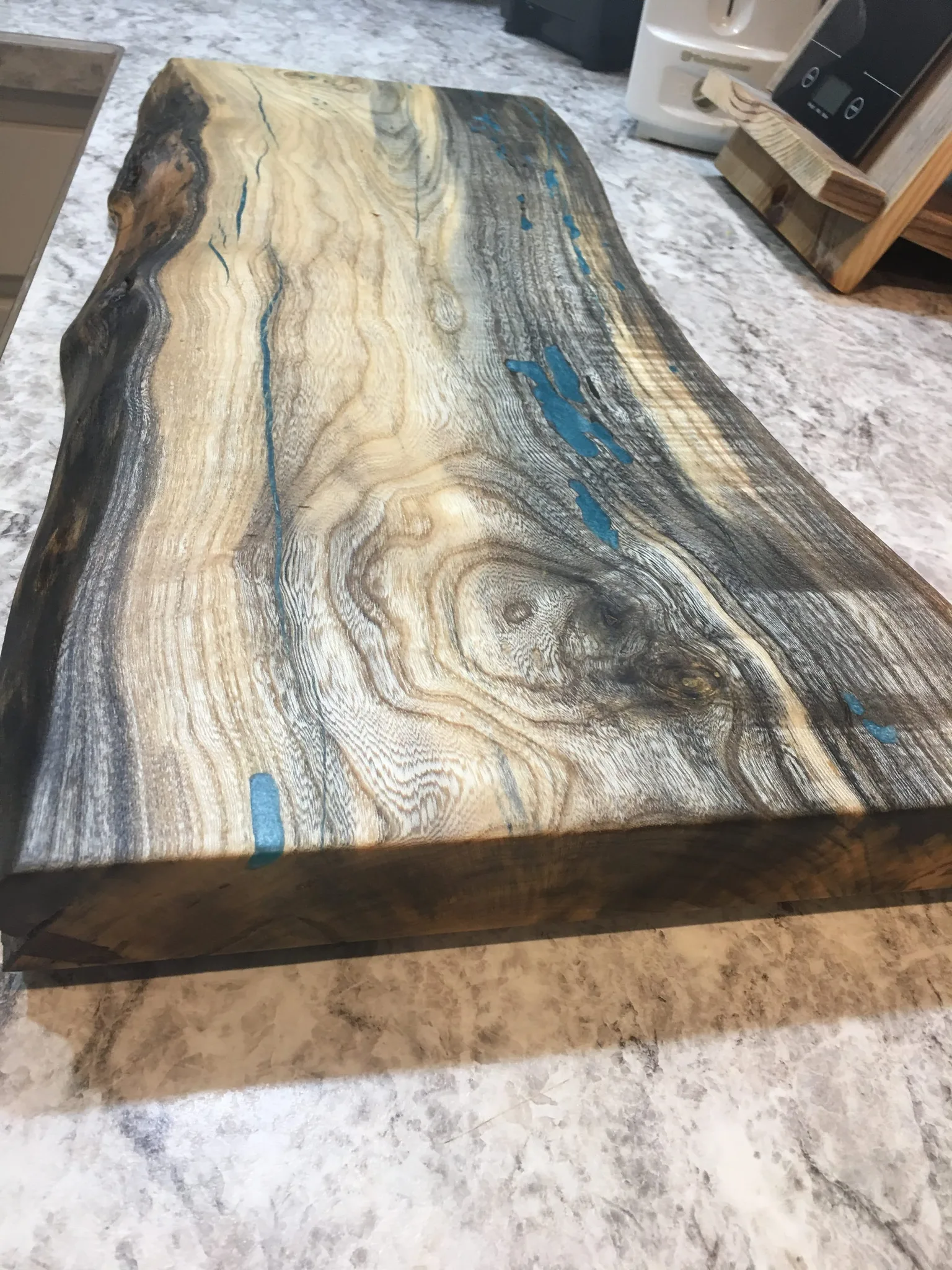
Second Chance Sawmill in Stephenville, Texas, took a figured hardwood slab with dramatic grain swirl and elevated it with turquoise epoxy resin inlays that fill natural cracks and voids. The result is a live edge wood bar top that reads as much like sculpture as surface. The resin glows against the darker wood, tracing fault lines and highlighting the slab’s geological history in a way that clear finish alone never could.
The live edge runs along one side, preserved without bark but retaining the tree’s original contour. The grain itself is exceptional—tight swirls and contrasting light and dark zones that suggest burl or crotch figure. A clear protective topcoat seals everything, locking in the resin and bringing the grain into high relief. The slab rests on what appears to be a marble or stone base, a pairing that underscores the material’s luxury without softening its raw, elemental appeal.
This approach—combining live edge wood slab countertop character with resin artistry—suits clients who want their surfaces to provoke conversation. It’s bold, unapologetically decorative, and rooted in the specific story of one tree’s growth.
Live edge bar tops and countertops succeed when they’re treated as anchors rather than accents—surfaces substantial enough to carry a room’s material narrative. Whether you’re drawn to the quiet warmth of walnut or the drama of resin-inlaid figure, the key is finding a slab whose edge and grain align with the space’s broader design language. The right piece doesn’t need explanation; it simply belongs.
Image credits
Photographs are from the project galleries of the lumber businesses below. Each business name links to its profile on Lumbr; each "source page" link redirects out to the business's own site (we log referrals so we can share traffic data with featured vendors). If your business is featured and you'd like an image removed, email hello@lumbr.me .
- Baldwin Hardwoods — Fort Collins, CO
- Second Chance Sawmill — Stephenville, TX
- Urban Lumber Co. — Springfield, OR