Live-Edge Dining Tables: Design Ideas & How to Style Them
Discover how live edge wood transforms dining spaces with natural beauty. Explore design ideas for live edge dining tables, from epoxy rivers to sculptural…
Published · Reviewed by Lumbr editorial
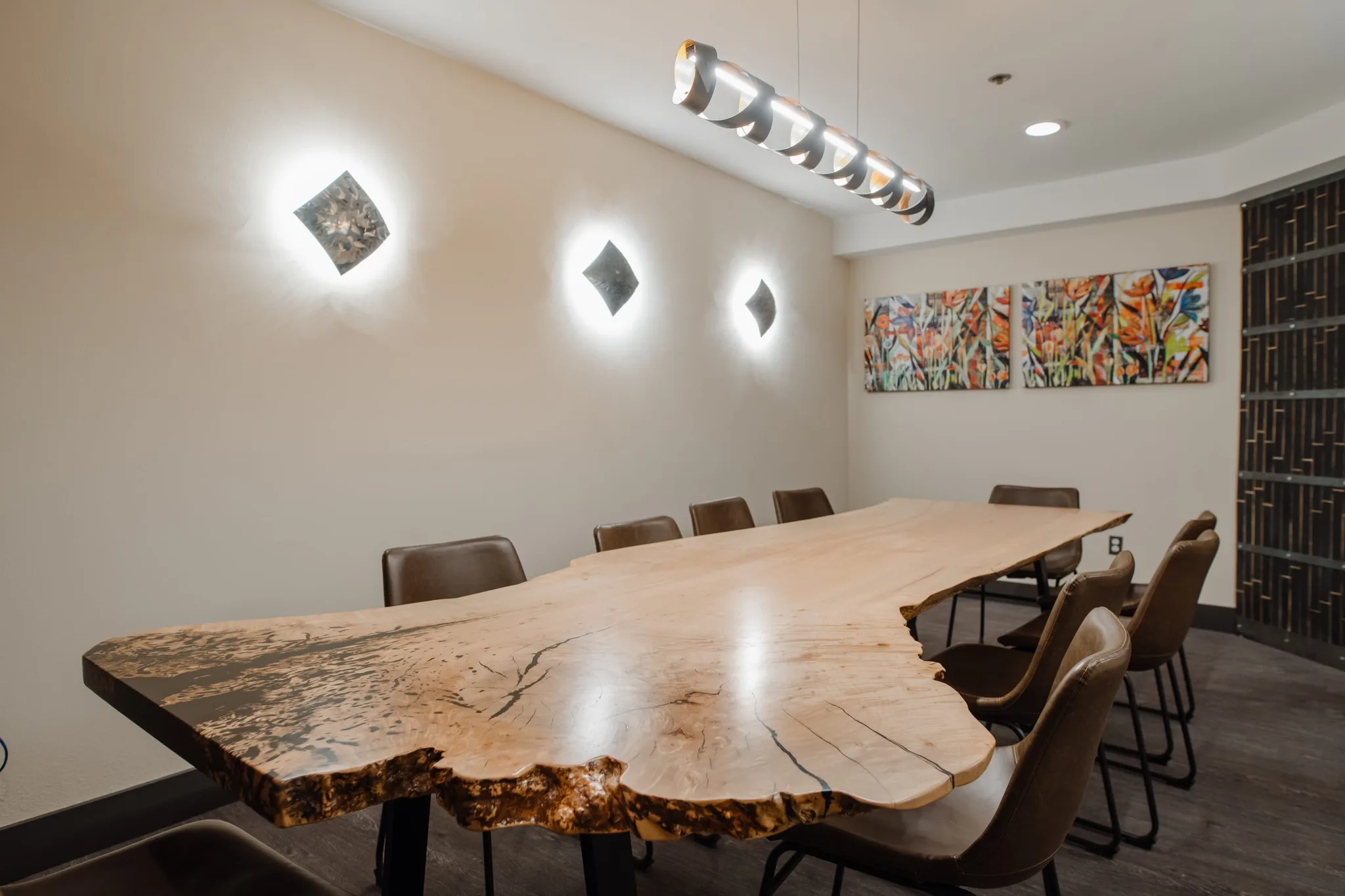
Live edge wood brings the raw beauty of the forest into the dining room, preserving the organic contours and natural character that make each slab unrepeatable. A live edge dining table anchors a space with presence—bark inclusions, spalting, and undulating edges become conversation pieces that soften the geometry of modern interiors. Whether you’re drawn to the drama of epoxy rivers or the quiet elegance of a single slab on minimalist legs, these tables prove that the most compelling design often starts with honoring the material exactly as it grew. The key is balancing that organic wildness with thoughtful styling choices that let the wood take center stage.
Epoxy River Inlays: Where Craft Meets Drama
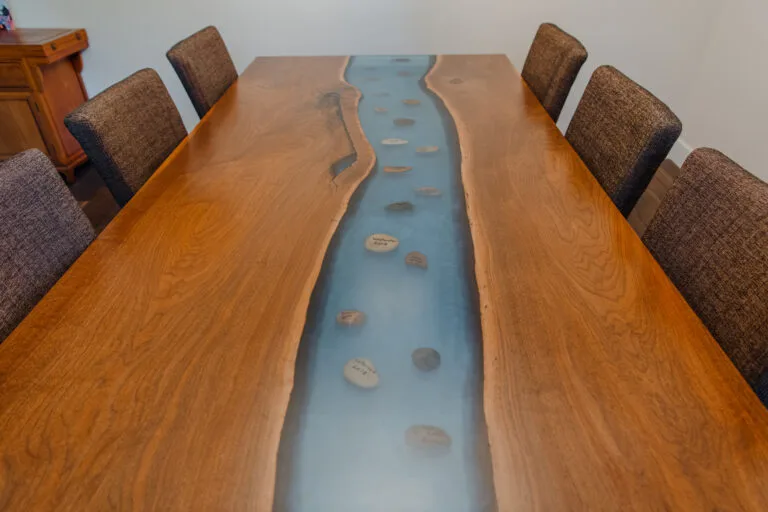
When two live edge slabs meet, the gap between them becomes an opportunity. This dining table from Baldwin Hardwoods in Fort Collins pairs mirror-image natural edges with a translucent blue epoxy river that runs the full length of the piece. Embedded stones and pebbles suspended in the resin catch light and add texture, transforming what could be a simple join into a focal point that reads almost like water flowing through canyon walls.
The technique demands precision—epoxy must be poured in controlled layers, and the slabs need to be stabilized perfectly parallel—but the payoff is a table that feels both organic and intentional. The clear finish on the hardwood lets the grain speak without competing with the resin’s color. Upholstered chairs in neutral tones keep the focus on the table itself, a smart move when the centerpiece carries this much visual weight.
This approach works especially well in modern or transitional spaces where you want a nature-inspired element without going full rustic. The epoxy river bridges the gap—literally and stylistically—between raw lumber and refined interior.
Sculptural Bases That Elevate the Slab
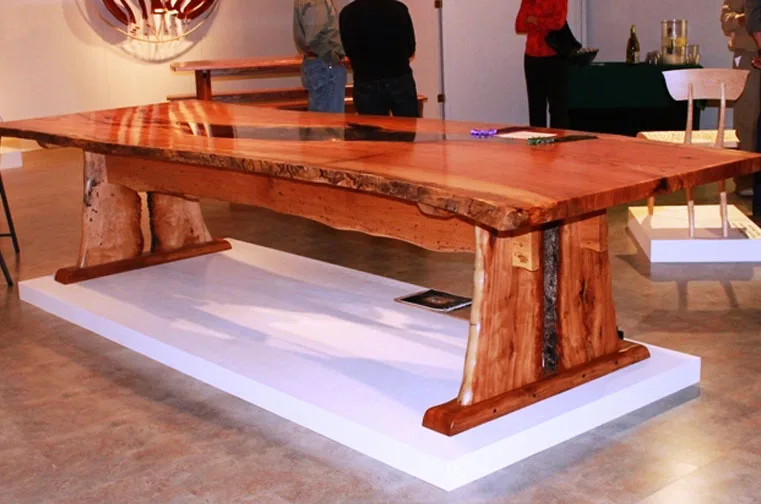
A live edge slab is only as good as what holds it up. This cherry or mahogany table from Berdoll Sawmill in Cedar Creek, Texas, sits on a double-pedestal base that incorporates natural wood forms—gnarled, organic shapes that echo the slab’s own irregular edges. The base isn’t trying to disappear; it’s part of the composition, a sculptural element that reinforces the table’s connection to the tree it came from.
The slab itself is a study in contrasts: rich reddish-brown tones, prominent live edges with intact bark, and a black resin inlay running through the center like a geological fault line. The glossy finish amplifies the drama, making the grain patterns pop under showroom lighting. Displayed on a raised white platform, the table reads as both functional furniture and art object.
When you’re working with live edge lumber this expressive, the base becomes a critical design decision. Metal legs offer industrial contrast, but a sculptural wood base like this one creates continuity, reinforcing the idea that the entire piece grew from the same organic vocabulary.
Natural Voids: Celebrating Imperfection
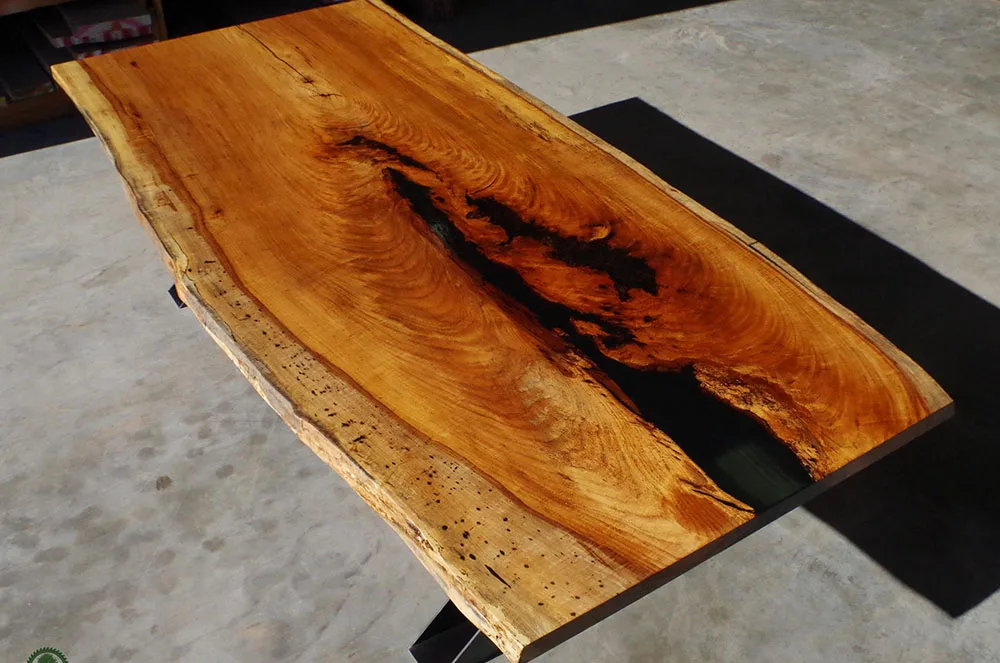
Not every live edge wood slab is perfect, and the best designers know when to lean into the flaws. This maple slab from Berdoll Sawmill features a dramatic natural void running through its center—a knot or decay pocket that would have been rejected in conventional lumber but here becomes the table’s defining feature. The void is left open, a window into the tree’s history, framed by warm honey-golden wood with cathedral grain that radiates outward.
The black metal base provides a clean, industrial counterpoint that lets the slab’s character take center stage. This kind of pairing—raw organic form on minimalist steel—has become a signature move in contemporary design, and for good reason: it works. The contrast sharpens both elements, making the wood feel more alive and the metal more deliberate.
Slabs like this are versatile. At six to eight feet long, this piece could anchor a dining room, function as an oversized desk, or serve as a dramatic coffee table in a loft space. The key is giving it room to breathe and resisting the urge to over-style around it.
Book-Matched Slabs with Resin Rivers
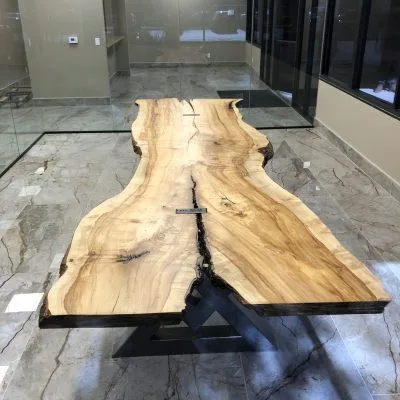
Book-matching—slicing a log and opening the two halves like pages of a book—creates mirror-image grain patterns that feel both intentional and organic. This live edge table from Hunski Hardwoods in Sacramento takes that symmetry and runs a black epoxy river down the center, joining two blonde slabs with a dark, glossy seam that emphasizes the natural edge contours on both sides.
The wood is likely maple or ash, finished to a high gloss that brings out every ripple and character mark. The black resin is a bolder choice than the more common blue or clear epoxy; it reads as modern and sophisticated, almost like a tuxedo stripe. Mounted on a sleek black metal pedestal base, the table has a floating quality, as if the slab is hovering above the polished concrete floor.
This is live edge for the minimalist—clean lines, restrained palette, and a finish that’s almost jewel-like. It proves that live edge tables don’t have to lean rustic. With the right slab selection and finishing choices, they can hold their own in the most contemporary settings, bringing warmth and texture without sacrificing refinement.
Live edge tables reward careful selection and restraint. The wood itself carries enough visual interest that the best styling often means stepping back—neutral chairs, simple lighting, and a willingness to let the grain and edge do the talking. Whether you choose epoxy drama or natural voids, sculptural bases or minimalist steel, the goal is the same: honor the slab and build around it with intention.
Image credits
Photographs are from the project galleries of the lumber businesses below. Each business name links to its profile on Lumbr; each "source page" link redirects out to the business's own site (we log referrals so we can share traffic data with featured vendors). If your business is featured and you'd like an image removed, email hello@lumbr.me .
- Baldwin Hardwoods — Fort Collins, CO
- Berdoll Sawmill — Cedar Creek, TX
- Hunski Hardwoods — Sacramento, CA